


Oatmeal tofu cat litter is a Plant-based cat litter concept that combines tofu-style litter materials with oatmeal or oat-derived ingredients. It is designed for cat owners and pet product businesses looking for alternative litter formulations that emphasize convenient cleaning, moisture absorption, clumping performance, and manageable dust levels. Unlike conventional clay cat litter, which is primarily mineral-based, tofu cat litter generally uses plant fibers and binding ingredients to form absorbent pellets. An oatmeal tofu cat litter formulation may incorporate oat flour, oat fiber, or other oat-derived components, depending on the manufacturer's recipe and intended product characteristics.
The term "oatmeal tofu cat litter" does not describe one universally standardized formula. Some products may use soybean-derived fiber as the primary material, while others may combine pea fiber, plant starch, oat ingredients, or additional absorbent components. The exact ingredient list determines the product's physical properties, including pellet strength, moisture absorption, clumping behavior, texture, and odor management. Buyers should therefore review the declared composition rather than assuming that all products marketed as oatmeal tofu cat litter contain the same ingredients.
The main purpose of oatmeal tofu cat litter is to provide a practical litter solution that balances everyday usability with plant-derived material options. Depending on its formulation, the product may absorb liquid, form scoopable clumps, and help reduce the amount of loose waste left in a litter tray. Pellet dimensions and surface texture also influence how the litter feels under a cat's paws and how much material may be carried outside the litter box.
For manufacturers, distributors, wholesalers, and private label brands, oatmeal tofu cat litter offers an opportunity to develop a differentiated product within the plant-based cat litter category. Formula design, particle size, fragrance options, packaging format, and quality control can be adjusted according to the intended market, subject to production capabilities and applicable requirements.
A reliable evaluation process should focus on measurable product performance. Water absorption, clump integrity, dust content, moisture level, pellet durability, and storage stability are more useful purchasing criteria than broad descriptions such as natural, premium, or eco-friendly. By understanding these characteristics, buyers can compare oatmeal tofu cat litter products more accurately and select a formulation suitable for their customers.
The performance of oatmeal tofu cat litter depends on the interaction between its ingredients. Each material contributes different physical characteristics, and the finished product must be evaluated as a complete formulation rather than by examining one ingredient in isolation.
Tofu-style cat litter is commonly associated with plant fibers derived from soybean processing or other suitable plant-based fiber sources. Soybean-derived materials can contribute to the structure of the pellets and provide a fibrous base for moisture absorption. The actual material source and processing method vary between manufacturers.
When evaluating oatmeal tofu cat litter, buyers should determine whether soybean fiber, tofu residue, pea fiber, or another plant material forms the main structural component. These materials are not automatically interchangeable, because their particle structure, moisture content, and binding behavior may differ.
Oatmeal tofu cat litter may incorporate oat flour, oat fiber, or other oat-derived ingredients. These components can influence texture, particle formation, and the overall composition of the finished product. Their function depends on the specific formulation and processing conditions.
The word "oatmeal" alone does not establish that a product contains a particular percentage of oats or that oats provide a specific absorption or odor-control performance. Buyers should request an ingredient declaration and confirm the intended role of the oat-derived material.
Plant starches may be used to help bind fibers into pellets. Their behavior depends on starch type, concentration, moisture, and processing temperature. An appropriate binding system can help maintain pellet integrity during handling and transportation while allowing the litter to respond to moisture during use.
Too little binding may result in fragile pellets and increased fines. Excessive binding may affect the speed at which liquid penetrates the material or the way clumps break apart during disposal. Formulation development therefore requires a balance between dry strength and wet performance.
Depending on the product design, oatmeal tofu cat litter may contain additional ingredients intended to adjust color, scent, moisture management, or odor performance. Some products may use natural-looking colors, while others may include fragrance or deodorizing components.
The presence of a functional ingredient should not automatically be interpreted as proof of improved safety or performance. Manufacturers should evaluate each addition for compatibility with the base materials and provide appropriate information for customers. Unscented formulations may also be useful for buyers who prefer products without added fragrance.
Ingredient category | Potential function | Important consideration |
Soybean-derived fiber | Provides a plant-based structural material | Confirm source and proportion |
Oatmeal or oat fiber | Adjusts composition and texture | Verify the actual oat ingredient |
Plant starch | Supports pellet binding | Evaluate clumping and wet strength |
Pea or other plant fiber | Provides additional fibrous structure | Check consistency between batches |
Optional fragrance | Adds a selected scent | Assess suitability and labeling requirements |
Optional deodorizing ingredient | May support odor management | Require evidence for performance claims |
Processing aids | Support manufacturing operations | Confirm suitability and residual limits where relevant |
A complete ingredient declaration is essential for accurate product positioning. It also helps distributors answer questions about material composition, fragrance, storage, and disposal.
The benefits of oatmeal tofu cat litter depend on its formulation and verified performance. The following characteristics describe potential product advantages rather than guaranteed results for every formula.
Oatmeal tofu cat litter can be developed using plant-derived fibers and starches. This makes it relevant to product ranges that include alternatives to conventional mineral-based litter. For brands developing a plant-based cat litter collection, oat-related formulations may provide an additional product variation alongside standard tofu, cassava, wood, and mixed-material litter.
However, plant-based composition alone does not establish that a finished product is fully biodegradable, compostable, or suitable for every disposal method. Those claims require assessment of the complete formulation and the conditions under which the product is processed or discarded.
Moisture absorption is one of the most important performance factors in oatmeal tofu cat litter. Absorbent fibers and suitable pellet structures can take up liquid and help keep the surface of the litter tray more manageable. Effective absorption may also contribute to easier cleaning when combined with suitable clumping behavior.
Actual absorption capacity should be measured under a defined test method. Results can vary according to the liquid used, contact time, sample preparation, and calculation method. Buyers should avoid comparing percentages from different suppliers unless the underlying test procedures are comparable.
Some oatmeal tofu cat litter formulations are designed to form clumps after absorbing liquid. Clumping can help separate used material from clean litter, reducing the need to replace the entire tray after each use. For consumers, this can simplify routine cleaning. For commercial buyers, consistent clumping is an important product quality indicator.
Clumping performance includes several distinct properties: the time required to form a clump, its resistance to breaking, the amount of loose material remaining around it, and whether wet litter sticks excessively to the bottom of the tray. A product that clumps quickly but crumbles during scooping may not provide a satisfactory user experience.
Fine particles may develop during production, packaging, transport, and normal handling. Excessive dust can make filling and cleaning less convenient. Oatmeal tofu cat litter can be processed through screening and other suitable dust-reduction procedures to manage loose fines.
Low-dust claims should be supported by a defined measurement method and actual test results. The appearance of a pellet is not sufficient evidence that the product contains little dust. Buyers should evaluate dust levels during pouring, scooping, and transportation where practical.
Plant-based pellet products may offer convenient handling because of their shape and bulk density. The actual weight of a package depends on pellet density, moisture content, and packaging design. A lighter product by volume may be easier to carry, but comparisons should be based on both weight and usable volume rather than appearance alone.
For retailers and distributors, package weight, bag dimensions, pallet configuration, and resistance to crushing can affect storage and logistics efficiency. These factors should be considered alongside consumer-facing performance.
Oatmeal tofu cat litter can be positioned in several ways depending on its composition and verified characteristics. Product variations may include unscented formulas, different pellet sizes, customized package weights, and selected blends of plant fibers.
For private label programs, flexibility can help brands develop product lines for different customer groups. However, every variation should have a defined specification. Changes to fiber proportions, starch levels, fragrance, or moisture content can affect absorption, clumping, durability, and storage stability.
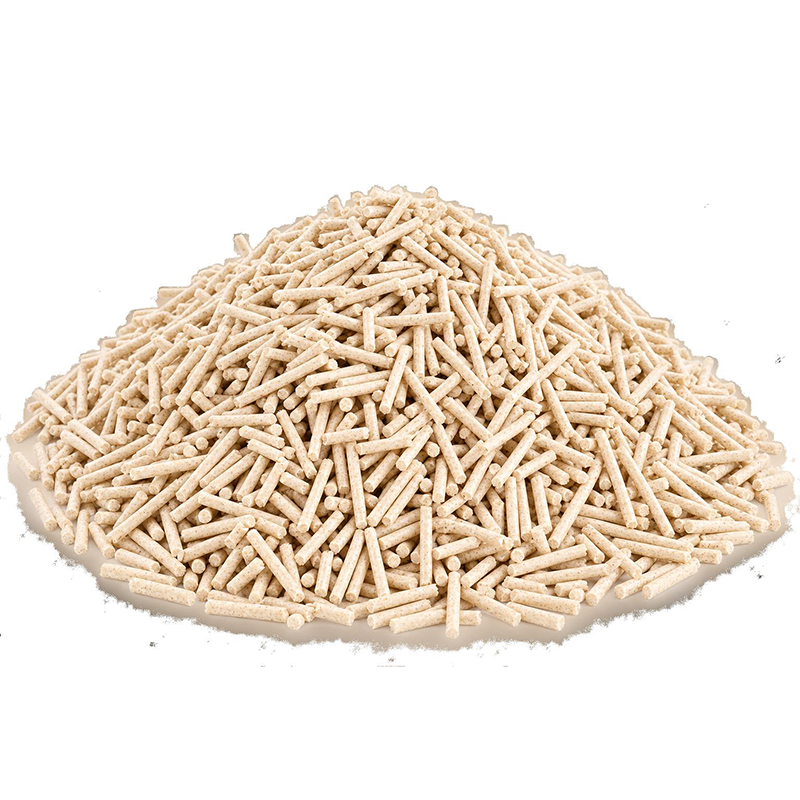
A technical specification sheet allows buyers to compare oatmeal tofu cat litter products using consistent criteria. Since the term does not correspond to one universal formula, the table below is a specification template rather than a claim that all products meet the same numerical values.
Parameter | What it describes | Recommended purchasing approach |
Main material | Primary fiber and binding system | Confirm the complete ingredient declaration |
Oat-derived ingredient | Type of oat material used | Identify whether it is oat flour, oat fiber, or another form |
Pellet shape | Cylindrical, irregular, or other shape | Request product samples |
Pellet diameter | Width of individual pellets | Specify the acceptable size range |
Pellet length | Length of individual pellets | Check consistency and handling needs |
Color | Natural or modified appearance | Define acceptable color variation |
Odor | Natural material odor or added fragrance | Confirm whether fragrance is included |
Moisture content | Water present in the finished product | Establish a tested limit |
Bulk density | Mass per unit volume | Confirm the measurement method |
Water absorption | Liquid absorbed relative to sample mass | Request the test method and results |
Dust content | Fine particles released or present | Define sampling and measurement procedures |
Pellet durability | Resistance to breakage | Evaluate handling and transport performance |
Packaging | Bag, pouch, carton, or bulk format | Match package design to the sales channel |
Storage stability | Ability to retain specified properties | Review shelf-life evidence and storage conditions |
Performance item | Why it matters | How to evaluate it |
Absorption rate | Indicates how quickly liquid is taken up | Use a controlled liquid-contact test |
Absorption capacity | Measures total liquid uptake | Record sample mass before and after testing |
Clumping time | Indicates how quickly a clump forms | Apply a fixed liquid volume and timing procedure |
Clump strength | Shows whether used litter remains scoopable | Apply a repeatable handling or mechanical test |
Wet adhesion | Indicates whether wet litter sticks to the tray | Inspect the tray after a defined contact period |
Dust generation | Affects filling and cleaning convenience | Use a defined dust measurement procedure |
Tracking | Describes how much litter leaves the tray | Conduct a standardized use simulation |
Odor management | Indicates the ability to control unwanted odors | Use a controlled evaluation method |
Pellet breakdown | Measures structural change after wetting | Record particle disintegration under defined conditions |
Batch consistency | Indicates repeatability between production lots | Compare results from multiple batches |
Numerical limits should be established through product development and testing, not copied from unrelated litter formulas. For example, a moisture limit that works for one fiber and binder combination may not be appropriate for another. Similarly, an absorption result depends on the test liquid, exposure period, draining procedure, and calculation method.
A useful product specification should identify the test method, sample size, acceptance criteria, and frequency of testing. It should also distinguish between target values and release limits. This approach makes quality requirements easier to communicate between manufacturers, importers, and distributors.
For oatmeal tofu cat litter, the final technical data sheet should contain verified values for the actual commercial formulation. If a property has not been measured, it is better to state that testing is required than to publish an unsupported number.
Manufacturing methods vary by equipment and formula, but a plant-based pellet product generally passes through several controlled stages. The exact process should be designed around the properties of the selected fiber, oat-derived material, and binding system.
The process begins with receiving and inspecting raw materials. Suppliers should provide suitable identification documents, specifications, and supporting quality records. Incoming inspection may include checks for appearance, moisture, foreign matter, odor, particle size, and other parameters relevant to the material.
Raw material acceptance criteria should be documented. Materials that do not meet the established requirements should be segregated and evaluated before use. Traceability records help connect each production batch with its incoming ingredients.
Some ingredients may require grinding or size reduction before mixing. Consistent particle size helps improve material distribution and can influence pellet formation. Excessive grinding may create additional fines, while particles that are too coarse may result in uneven texture or inconsistent binding.
The required preparation method depends on whether the formula uses oat flour, oat fiber, soybean-derived material, or other plant ingredients. Manufacturers should select equipment and processing settings that preserve the desired characteristics of each component.
Prepared ingredients are combined according to a controlled recipe. Mixing must distribute the fiber, starch, and any optional functional components evenly throughout the batch. Inconsistent mixing can lead to variations in pellet strength, moisture absorption, and color.
Water or other approved processing inputs may be introduced when required for pellet formation. The amount added should be controlled because excessive moisture can complicate drying, while insufficient moisture may affect shaping and binding.
The mixed material is formed into pellets using suitable extrusion or pelletizing equipment. Die configuration, pressure, feed rate, and material consistency can influence pellet diameter, length, density, and surface structure.
For oatmeal tofu cat litter, pellet dimensions should be selected according to the target product design. Uniform dimensions can improve packaging consistency and make product performance easier to evaluate. Excessive variation may affect pouring behavior, tracking, and the amount of broken material produced during transport.
Newly formed pellets may contain more moisture than the finished product specification allows. Controlled drying reduces moisture to the required level and supports storage stability. The drying process should be designed to avoid unnecessary thermal damage, excessive brittleness, or uneven moisture distribution.
After drying, pellets should be cooled before final screening and packaging. Packaging material that traps residual heat or moisture may contribute to condensation and product deterioration under unsuitable storage conditions.
Screening separates oversized particles, undersized fragments, and loose fines from the main product stream. Dust-removal equipment may be used to further reduce unwanted particles. These steps help improve appearance and product consistency.
The screening process should not be treated as a substitute for proper formulation and pellet formation. If pellets break easily during transport, the underlying causes may include insufficient binding, unsuitable drying conditions, or inadequate mechanical strength.
Before packaging, the finished oatmeal tofu cat litter should be checked against its established specification. Relevant tests may include moisture, pellet dimensions, absorption, clumping, dust content, and appearance. Additional tests may be necessary depending on the ingredients, market requirements, and product claims.
Packaging should protect the product from moisture and contamination during storage and transportation. Labels should identify the product accurately and include appropriate use, storage, and disposal instructions. Batch numbers and production records support traceability if a quality issue is identified later.
Stage | Main objective | Key control point |
Raw material inspection | Confirm incoming material suitability | Material identity and acceptance criteria |
Grinding | Prepare a consistent particle structure | Particle size and fine generation |
Mixing | Distribute ingredients evenly | Formula accuracy and moisture |
Pelletizing | Form pellets to the target dimensions | Shape, size, and structural integrity |
Drying | Reach the required moisture level | Temperature, time, and moisture uniformity |
Cooling | Stabilize the finished pellets | Product temperature and ambient conditions |
Screening | Remove unwanted fragments and fines | Particle-size distribution |
Final inspection | Verify product conformity | Test results against release limits |
Packaging | Protect product quality | Package integrity and batch identification |
A useful performance assessment considers several properties together. No single measurement can fully describe the quality of oatmeal tofu cat litter.
Absorption capacity is often expressed as the mass of liquid absorbed relative to the initial dry mass of the sample. One possible calculation is:
Water Absorption (%) = [(Wet Sample Mass − Dry Sample Mass) ÷ Dry Sample Mass] × 100
For a meaningful comparison, the test should specify the liquid type, contact time, sample mass, drainage procedure, and number of repetitions. Without these controls, two suppliers may report different values even when their products perform similarly.
Clumping tests should examine both formation time and the strength of the resulting clump. A defined volume of liquid can be applied to a measured sample, followed by a specified waiting period. The resulting clump can then be assessed for integrity during lifting or handling.
A strong clump should remain manageable during scooping, but excessive adhesion to the litter tray may reduce convenience. Both properties should therefore be considered when selecting a formulation.
Dust content may be assessed using a suitable screening, weighing, or laboratory method. The specification should clarify whether it measures loose fines in the product, dust released during handling, or another defined parameter.
These measurements are not necessarily equivalent. A product with a low initial fines content may still generate dust if the pellets break easily. Repeated handling and transport simulations can help identify this issue.
Odor management depends on several factors, including moisture retention, microbial activity, waste removal frequency, ventilation, and the formulation's ability to manage odor-causing compounds. A pleasant fragrance does not necessarily demonstrate effective odor control.
A useful evaluation should use a defined test method and avoid unsupported claims such as complete odor elimination. Instructions for regular scooping and litter replacement remain important even when a product includes deodorizing ingredients.
Pellet durability affects how much product remains intact during packaging, transport, and daily use. Mechanical testing or controlled handling can help quantify breakage. Tracking can be assessed by observing how much material is carried outside the litter tray under a repeatable setup.
Tracking also depends on pellet length, shape, surface texture, tray design, and the cat's behavior. Product descriptions should therefore avoid promising zero tracking unless a clearly defined and defensible basis exists.
Oatmeal tofu cat litter belongs to a broader category of alternative litter materials. Each category has different characteristics, and the best option depends on the intended use, formula, and customer priorities.
Cat litter type | Typical material base | Common product characteristics | Key evaluation points |
Oatmeal tofu cat litter | Tofu-style plant fibers with oat-derived ingredients, depending on formula | Plant-based pellet option with formulation-dependent absorption and clumping | Verify oat content, clumping, dust, and composition |
Standard tofu cat litter | Soybean-derived or other plant fibers with binders | Often designed for absorbency and scoopable clumps | Check fiber source and pellet strength |
Cassava-derived materials | Performance varies with starch content and formulation | Assess clumping, wet breakdown, and dust | |
Processed wood or wood-derived materials | May be pellet-based or granular | Check absorption, scent, and breakdown behavior | |
Processed paper fibers | Often designed for moisture uptake and a soft or lightweight structure | Evaluate saturation, durability, and cleaning | |
Clay minerals | Commonly formulated for strong clumping | Consider dust, weight, tracking, and disposal | |
Two or more litter materials | Combines selected characteristics of different ingredients | Review blend ratio and batch consistency | |
Silica gel cat litter | Porous silica material | Designed for moisture uptake and odor management | Assess dust, saturation behavior, and disposal requirements |
This comparison describes general material categories rather than guaranteed product results. Formulation differences within the same category can be substantial. A well-developed product specification is therefore more informative than a material name alone.
Selecting oatmeal tofu cat litter requires matching product performance with the intended market and use conditions. Consumers may prioritize easy cleaning and texture, while distributors and importers often need additional information about production consistency, packaging, and documentation.
The first step is to establish what the product actually contains. Ask whether the main structure comes from soybean fiber, pea fiber, oat-derived ingredients, or another material. Confirm the role of binders and whether the product contains fragrance, mineral additives, or other functional ingredients.
Clear ingredient information supports accurate labeling and helps prevent misunderstandings about the term oatmeal tofu cat litter.
Request a technical data sheet covering pellet dimensions, moisture content, bulk density, absorption, clumping, dust, and packaging. Each figure should be associated with a clear test method where appropriate.
If the product will be sold under a private label, the specification should form part of the purchasing agreement. This makes it easier to evaluate production samples and investigate differences between shipments.
Sample evaluation should reproduce normal handling and cleaning conditions as closely as practical. Observe how the litter pours, whether pellets remain intact, how quickly liquid is absorbed, and whether clumps can be removed without excessive breakage.
For commercial procurement, samples from different batches may help assess consistency. Testing only one small sample may not reveal variation in a large production run.
Oatmeal tofu cat litter may absorb moisture from its surroundings if the packaging does not provide adequate protection. Buyers should evaluate bag strength, sealing quality, pallet arrangement, and storage recommendations.
Packaging should also be appropriate for the intended sales channel. Retail products may require consumer-friendly pack sizes and clear instructions, while wholesale shipments may prioritize transport efficiency and protection during extended storage.
Do not assume that oatmeal tofu cat litter is flushable simply because it contains plant-derived ingredients. Flushability depends on the full formula, particle breakdown, local plumbing conditions, and applicable disposal guidance.
Consumers should follow the product label and local wastewater rules. Where flushability has not been specifically tested and approved for the intended use, disposal with household waste according to local guidance is the more cautious approach.
Different markets may have different labeling, packaging, language, and product documentation requirements. Importers should confirm applicable rules before shipment, particularly when products contain fragrances or make environmental claims.
For OEM and private label projects, specifications should be agreed upon before production. Formula, particle dimensions, bag weight, artwork, batch coding, and acceptance criteria should be documented to reduce the risk of disputes.
Correct use helps maintain litter box hygiene and allows the product to perform as intended. The manufacturer's instructions should take priority because recommended filling depth, cleaning frequency, and replacement intervals may vary by formula.
Remove old litter and clean the tray using a suitable cleaning method. Allow the box to dry before adding new material. A clean tray makes it easier to evaluate the performance of a new oatmeal tofu cat litter product.
Fill the litter box to the depth stated on the package. An appropriate depth gives the cat enough material to dig and may help prevent liquid from reaching the bottom of the tray. The required amount depends on the tray dimensions and the product's pellet characteristics.
Remove solid waste promptly and scoop formed clumps as directed. Regular removal helps maintain a cleaner litter area and reduces the accumulation of used material. If the formula is non-clumping, follow the specific replacement instructions instead.
Check the litter box for excessive dampness, unusual odor, or a change in pellet texture. If the product becomes saturated or no longer performs as expected, replace the material according to the label. High humidity and unsuitable storage can also affect unused litter.
Some cats may need time to accept a new litter texture or scent. When changing products, a gradual transition can help the cat become familiar with the new material. Monitor litter box use and consult a veterinarian if a cat persistently avoids the tray or develops signs of discomfort.
Follow the packaging instructions and local waste disposal requirements. Do not compost used cat litter for food-growing applications unless an appropriate process and local guidance specifically support that use. Do not flush used litter unless the product is explicitly suitable for that disposal method and local plumbing regulations permit it.
Storage conditions influence the quality of oatmeal tofu cat litter. Plant-derived materials may be sensitive to moisture, and poorly controlled storage can contribute to changes in pellet strength, odor, and overall product condition.
Store unopened packages in a dry area away from leaks, standing water, and excessive humidity. Once opened, reseal the package or transfer the litter to a clean, dry container when appropriate. Avoid placing packages directly on damp floors.
Torn bags and broken seals can allow moisture and contaminants to enter. During warehousing, packages should be handled carefully to reduce crushing and abrasion. Damaged units should be inspected before sale or use.
Shelf life should be established through suitable product stability evaluation rather than assumed from the ingredient category. The manufacturer should identify the recommended storage conditions and any relevant limitations.
For distributors, a first-in, first-out inventory system can help manage stock rotation. Batch numbers and production dates should remain legible throughout storage and transportation.
Storage factor | Recommended practice |
Humidity | Keep products in a dry storage environment |
Direct water exposure | Prevent contact with rain, leaks, and standing water |
Sunlight and heat | Follow the manufacturer's stated storage limits |
Packaging | Inspect seals and bags for damage |
Warehouse placement | Keep products clean and protected from damp floors |
Stock rotation | Track batch numbers and production dates |
Shelf life | Follow the validated product label |
Opened packages | Reseal and protect from moisture and contamination |
Quality control should cover the complete manufacturing process, from incoming ingredients to finished packaging. Consistent inspection helps ensure that oatmeal tofu cat litter remains within the agreed specification and performs predictably across production batches.
Incoming material controls should verify ingredient identity, moisture, appearance, and relevant supplier documentation. During production, operators should monitor mixing consistency, pellet dimensions, drying conditions, and screening efficiency. Finished-product testing should then confirm that the litter meets its release criteria.
A documented batch system is particularly useful for identifying the source of quality variation. If a shipment shows excessive dust or inconsistent clumping, production records can help determine whether the issue originated in raw materials, mixing, pelletizing, drying, or packaging.
Control stage | Inspection focus | Purpose |
Supplier qualification | Ingredient identity and supporting documents | Improve incoming material consistency |
Incoming inspection | Moisture, appearance, and contamination | Prevent unsuitable materials from entering production |
Formulation control | Ingredient proportions and mixing | Maintain recipe consistency |
In-process inspection | Pellet dimensions and structural integrity | Detect production variation |
Drying control | Moisture and process uniformity | Support product stability |
Dust screening | Loose fines and broken particles | Improve handling quality |
Finished-product testing | Absorption, clumping, moisture, and appearance | Verify conformity to specification |
Packaging inspection | Seal integrity, weight, and labeling | Protect product quality |
Batch traceability | Ingredient lots and production records | Support investigations and corrective actions |
Microbiological or chemical testing may be appropriate depending on the ingredients, processing environment, product claims, and target-market requirements. Such testing should be selected according to a documented risk assessment rather than presented as a universal requirement for every formulation.
Oatmeal tofu cat litter may use plant-derived ingredients, but its environmental impact depends on the entire product life cycle. Raw material sourcing, processing energy, drying requirements, packaging, transport distance, and disposal methods all contribute to the overall impact.
Plant-based ingredients do not automatically make a finished product compostable or environmentally preferable in every situation. For example, a litter may contain biodegradable ingredients but still require disposal through a waste stream that does not support effective biodegradation. Used cat litter also presents different considerations from clean manufacturing scrap.
Environmental claims should therefore be specific and supported by suitable evidence. Terms such as biodegradable, compostable, renewable, or flushable should not be used interchangeably. Each describes a different property or disposal pathway.
For manufacturers, potential improvement areas include reducing avoidable production waste, recovering suitable clean material where technically and legally appropriate, improving packaging efficiency, and minimizing unnecessary transport damage. These measures should be evaluated alongside product performance and hygiene requirements.
For consumers, responsible use includes scooping regularly, avoiding unnecessary product waste, storing unused litter correctly, and following local disposal guidance. Selecting an oatmeal tofu cat litter product based on verified specifications and realistic environmental claims is more useful than relying on broad marketing language.
The commercial potential of oatmeal tofu cat litter depends on whether the product meets the needs of the intended customer segment. Pet supply distributors may prioritize consistent quality and dependable replenishment, while online retailers may focus on package dimensions, product presentation, and customer feedback.
Private label brands may require greater flexibility in product specifications and packaging. Depending on manufacturing capabilities, customization may include bag weight, label language, pellet dimensions, scent options, and selected formula adjustments. Each change should be reviewed for its effect on product performance and regulatory compliance.
Wholesale buyers should evaluate more than the quoted unit price. The total cost of ownership may include freight, packaging, warehousing, product loss from breakage, quality inspection, and returns. A product with a lower purchase price may not be the most economical choice if it generates excessive fines or inconsistent clumps.
Purchasing item | Questions to confirm |
Product composition | What ingredients are used, and in what general proportions? |
Technical specification | Are the key performance values documented? |
Sample approval | Has the actual product been evaluated before bulk ordering? |
Quality control | What inspections are performed for each batch? |
Customization | Which formula, size, fragrance, and packaging options are available? |
Packaging | Does the format protect the product during storage and shipment? |
Production capacity | Can the supplier support the required order volume? |
Lead time | What are the production and shipping schedules? |
Documentation | Are labels, safety information, and export documents appropriate for the destination? |
Traceability | Can finished goods be linked to production batches? |
Disposal claims | Are environmental and flushability claims supported by evidence? |
Commercial terms | Are specifications, tolerances, and acceptance procedures included in the agreement? |
A written product specification and a defined sample approval process help establish a common understanding between the manufacturer and the buyer. For recurring orders, periodic review of performance data can identify quality changes before they become larger supply problems.
Oatmeal tofu cat litter may contain tofu-style plant fibers, oat flour or oat fiber, plant starches, and other formulation-specific ingredients. The exact composition differs between products. Buyers should check the ingredient declaration rather than assume that all oatmeal tofu cat litter uses the same recipe.
The main distinction is the use of oat-derived ingredients in the oatmeal version. Standard tofu cat litter may rely primarily on soybean-derived or other plant fibers with binding ingredients. However, naming conventions vary, so the ingredient list is the most reliable way to identify the difference.
It may form clumps when its fiber and binder system is designed for that purpose. Clumping speed and strength depend on the formulation, moisture conditions, and pellet structure. Buyers should confirm performance through a technical data sheet and practical sample testing.
Some formulations are designed to minimize dust through pellet-strength control, screening, and dust-removal processes. Actual dust levels vary. A low-dust claim should be supported by a defined measurement method rather than inferred from the product's plant-based composition.
Odor management depends on moisture handling, waste removal, ventilation, and the ingredients used in the formula. Some products may contain additional deodorizing ingredients or fragrance. Effective performance should be evaluated under controlled conditions, and regular litter box cleaning remains necessary.
Not necessarily. Flushability depends on the complete formulation, the way the material breaks down in water, the amount disposed of, and local plumbing and wastewater rules. Never assume that a plant-based litter is suitable for flushing without explicit product instructions and local approval.
The biodegradability of a finished product depends on its ingredients and the conditions under which it is tested or disposed of. Plant-derived ingredients alone do not establish a specific biodegradation rate or guarantee compostability. Environmental claims should be supported by appropriate evidence.
Many cats can use different litter textures, but individual preferences vary. A cat may respond differently to pellet size, scent, or surface texture. Introduce a new product gradually and monitor the cat's litter box behavior.
Replacement frequency depends on the litter's clumping properties, the number of cats, litter box size, and usage. Remove waste regularly and follow the manufacturer's instructions for topping up or replacing the full contents. Non-clumping products may require a different cleaning routine.
Keep unopened packages in a dry, clean place and protect them from direct water exposure. Reseal opened bags to limit moisture absorption. Follow the stated shelf life and storage conditions on the product label.
Wholesale buyers should request ingredient information, pellet dimensions, moisture content, absorption capacity, dust test results, clumping performance, packaging details, and batch traceability information. The test method and acceptance criteria should accompany important numerical claims.
Customization may be possible depending on the manufacturer's equipment, formulation capabilities, and production requirements. Potential options include packaging format, label design, pellet size, and selected formulation adjustments. All changes should be validated before commercial production.
It may be suitable for export when the product, labeling, packaging, and documentation meet the requirements of the destination market. Importers should verify applicable product safety, chemical, labeling, customs, and environmental claim requirements before placing an order.
Compare the ingredient composition, absorption test method, clump strength, dust measurement, pellet durability, moisture level, packaging, and verified batch consistency. Use comparable test procedures and evaluate physical samples wherever possible. A product's name or advertised benefit alone is not enough to establish superior performance.
Oatmeal tofu cat litter represents a plant-based product concept that combines tofu-style litter materials with oat-derived ingredients. Its practical value depends on the formulation, production process, and quality controls used to deliver consistent moisture absorption, clumping behavior, dust management, and handling performance.
For consumers, the most important considerations are comfort, cleaning convenience, reliable product instructions, and appropriate disposal. For distributors, wholesalers, and private label brands, ingredient transparency, technical specifications, batch consistency, packaging, and supply reliability are equally important.
A well-defined specification helps distinguish measurable product performance from broad marketing claims. Buyers should request verified data for absorption, clumping, dust, moisture, pellet dimensions, and storage stability, while confirming the actual ingredient composition of each formula.
Environmental properties also require careful evaluation. Plant-derived materials do not automatically guarantee biodegradability, compostability, or flushability under every condition. Clear labeling and evidence-based claims support better purchasing decisions and responsible product use.
As the range of alternative cat litter materials expands, oatmeal tofu cat litter can provide an additional formulation option for product developers and pet supply businesses. Its suitability should ultimately be determined by the needs of the target market and the performance of the finished product, supported by transparent specifications and repeatable quality testing.
 RELATED
 RELATED
 RELATED
 RELATED

This website uses cookies to ensure you get the best experience on our website.

 Pусский
 Deutsch
 العربية
 中文

 WhatsApp
 Phone
 E-mail
 Message